
Varicose veins
At CPH Privathospital we offer examination and treatment of varicose veins. Treatment is provided by Martin Lawaetz, consultant (specialist doctor) in vascular surgery, who has more than 20 years of clinical and research experience with modern treatment of varicose veins.
The choice of treatment is based on your symptoms, a clinical assessment and an examination with duplex ultrasound. In this way, treatment can be tailored to the course of the veins and your individual needs.
What are varicose veins?
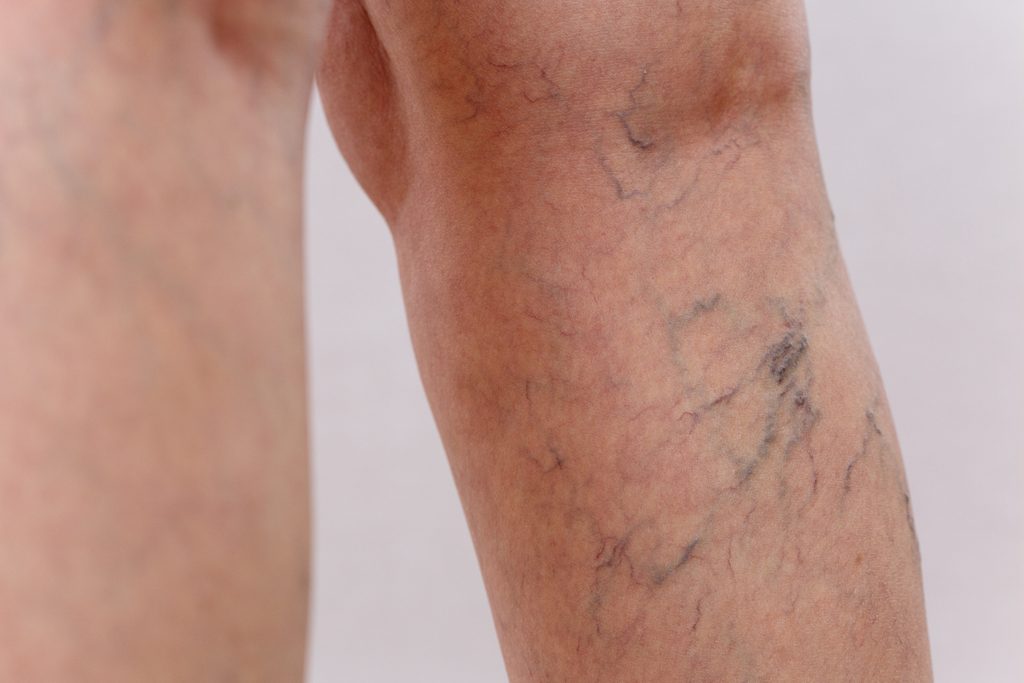
Varicose veins are dilated and visible veins that typically occur on the legs. They are often caused by the valves in the superficial veins not closing sufficiently. This means that blood can flow in the wrong direction and collect in the veins, causing them to dilate and become visible under the skin.
In the vast majority of cases, varicose veins are not dangerous in themselves. However, they can cause physical symptoms, skin changes or be cosmetically bothersome.
Get a free preliminary examination until 31 October 2026
Have your varicose veins assessed by consultant Martin Lawaetz with clinical examination and duplex ultrasound.
Read more here
Symptoms of varicose veins
Some people experience no symptoms other than the visible veins. Others may experience, for example:
• Heavy or tired legs
• Tension or restlessness in the legs
• Night cramps
• Itching or tenderness around the varicose veins
• Pain
• Swelling, particularly late in the day
• Skin discolouration or eczema
• Ulcers on the lower leg that do not heal normally
The symptoms may also be caused by other conditions. Therefore, an individual assessment is important before deciding on treatment.
When should varicose veins be assessed?
It may be relevant to have your varicose veins examined if they cause physical or cosmetic discomfort. An assessment is particularly relevant if the symptoms affect your sleep, your work, your mobility or your daily activities.
You should also be assessed if you experience swelling, skin discolouration, ulcers that do not heal normally, a superficial blood clot or bleeding from a superficial varicose vein.
Pre-treatment examination with duplex ultrasound
Before any treatment, a clinical assessment and a duplex ultrasound examination are performed.
Duplex ultrasound is a non-invasive examination of the veins in the legs. The examination shows the direction of blood flow and makes it possible to assess the function of the venous valves, the course of the veins and any venous reflux. Venous reflux means that blood flows in the wrong direction in a vein.
The examination is usually performed while you are standing, as any problems with blood flow become more apparent under load.
The visible varicose veins do not always show where the underlying problem begins. Therefore, duplex ultrasound is an important part of the basis for choosing the right treatment.
Treatment of varicose veins
There is no single treatment method that is right for everyone. Treatment is planned based on your symptoms, ultrasound findings, the anatomy of the veins, any previous treatment and your expectations for the outcome.
Several methods can be combined if different parts of the venous system contribute to the varicose veins.
Heat treatment: Heat treatment, also called endovenous thermal ablation, is used to close an incompetent saphenous vein that is the cause of the visible varicose veins.
A thin fibre is inserted into the vein through a small needle puncture under ultrasound guidance. The vein is closed from the inside using heat, after which the body gradually absorbs the closed vein.
The treatment is performed under local anaesthesia and can be combined with other methods for treating visible varicose veins.
Foam sclerotherapy: In foam sclerotherapy, a medication in the form of foam is injected into the vein. The foam affects the vein wall, so that the vein can gradually close.
The method may be relevant for smaller veins, tortuous vein courses, recurrent varicose veins or as a supplement to another treatment. Some patients may require more than one treatment.
Miniphlebectomy: Miniphlebectomy is used to remove visible and bulging varicose veins close to the skin surface. The varicose veins are removed through very small incisions in the skin under local anaesthesia.
The method treats the visible side branches, but not necessarily the underlying cause of the varicose veins. Therefore, miniphlebectomy can be combined with thermal treatment or foam sclerotherapy if the examination shows a need for it.
After treatment
The treatment is performed on an outpatient basis, and you can go home shortly afterwards. After treatment, you may experience tenderness, a pulling or tight sensation, bruising, swelling or temporary skin changes.
After thermal treatment, an inflammation-like reaction may also occur around the treated vein. This may manifest as redness, warmth and tenderness.
The final result develops gradually and can often only be assessed after a few months. You will receive individual information about the expected course and any precautions in connection with your treatment.
Varicose vein treatment in collaboration with Venespecialisten
Examination and treatment of varicose veins is provided by Martin Lawaetz, consultant in vascular surgery and founder of Venespecialisten.
About consultant Martin Lawaetz
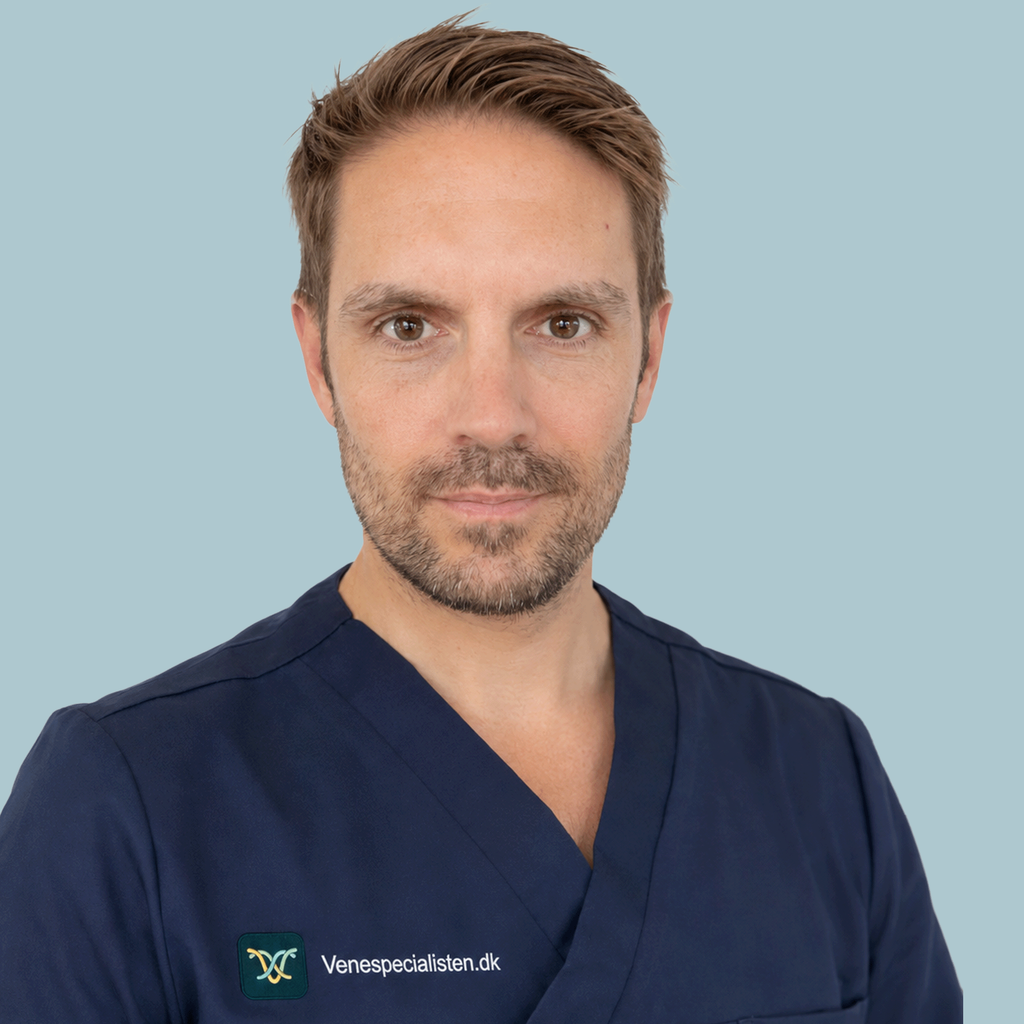
He has contributed to a large number of scientific publications and research projects on, among other things, laser treatment, radiofrequency treatment, foam sclerotherapy, surgical treatment and treatment of recurrent varicose veins.
The treatment always starts with a thorough assessment of the patient’s symptoms, the anatomy of the veins and the result of a duplex ultrasound scan. On this basis, the method – or combination of methods – that best suits the individual patient is selected.
Martin has particular experience with gentle combination treatment of recurrent and complicated varicose veins. At the same time, he has a pronounced cosmetic focus and broad experience with treatment of visible vessels on the legs, including spider veins, smaller superficial veins and cosmetically troublesome residual varices.
The goal is not only to treat the underlying venous disease, but also to achieve the best possible cosmetic result with as few side effects and the least possible impact on daily life as possible.
Book an appointment for examination
If you have varicose veins that cause physical or cosmetic problems, you can book an appointment for a preliminary examination at CPH Privathospital.
At the preliminary examination, you will be examined with duplex ultrasound and receive an individual assessment as well as information about your treatment options.