A skiing holiday means physical activity every day – and if you are not normally active in everyday life, it is important to prepare your body. Are your knees ready for the skiing holiday?

by Søren Winge – Senior Consultant and Consultant in Sports Surgery
According to the European ERV, up to 500,000 Danes go on skiing holidays every year. But unfortunately, very few have prepared well enough to speed down the slopes. Around 10,000 come home with major or minor injuries, and this makes the skiing holiday a less enjoyable experience.
For many, knee problems are a fact of life. The slopes are particularly hard on the knees because the knee is affected both from above by the hip/pelvis and from below by the ankles/feet – in other words, they are a joint in a structure of muscles, tendons, bones and connective tissue.
Our consultant in sports injuries estimates that over 50% of our skiing injuries can be avoided if we train the body before going on a skiing holiday, because if you are fit, the risk of injury is far lower.
Good physical fitness means stronger muscles and increased flexibility. No ligament can hold a joint in place without help from the muscles.
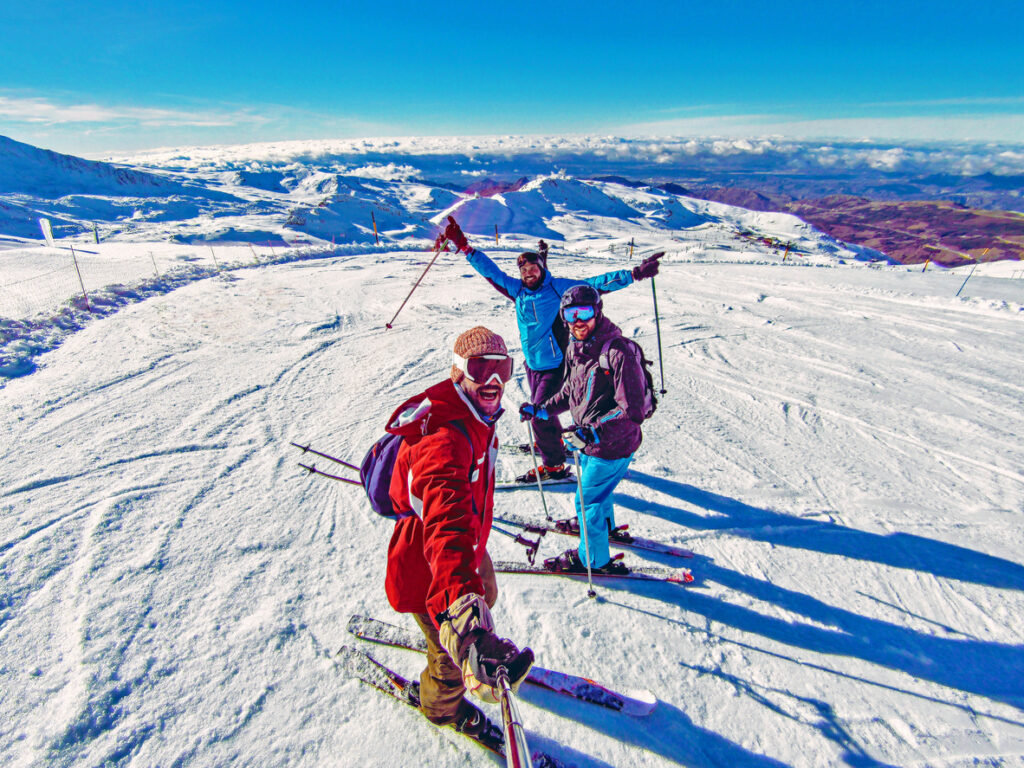
5 tips on how to prepare for your skiing holiday
- Train your balance
- Increase your endurance and reaction ability
- Strengthen the important muscles and minimise the risk of injury: No ligament can hold a joint in place without help from the muscles. Do lots of squats and lunges – preferably on one leg, so that balance is stimulated at the same time.
- Skiing is challenging for the whole body – not just the legs.
- Increase your flexibility
When you are on your skiing holiday.
- Warm-up – every day!
When you are on a skiing holiday it is VERY important that you remember to warm up – every morning.
A skiing holiday is a holiday, which means that many of us are both cold and stiff in the body when we set off onto the slopes in the morning. - Avoid bindings that are too tight on the skis
The vast majority of ski injuries to the knees do NOT occur at high speed on the way down the slope. On the contrary, injuries often occur at low speed when the bindings do not release. “Understate your weight and ability when the bindings are set”. That way you lose your skis and do not tear your cruciate ligament. - Consider where you take a break…
Do not stop in the middle of the slope to talk or take a break. Instead, take a break at the side, where there is no traffic. - When the ski injury has occurred
Should an accident nevertheless occur, we at CPH Privathospital can help you with the vast majority of ski injuries.
At CPH Privathospital our sports medicine doctors are specialised in the diagnosis and treatment of sports injuries. Should an accident occur, we are ready to help you with your sports injury from start to finish, whether you come as a self-paying patient, have health insurance or via the public waiting-time guarantee.
Read more about our treatments here